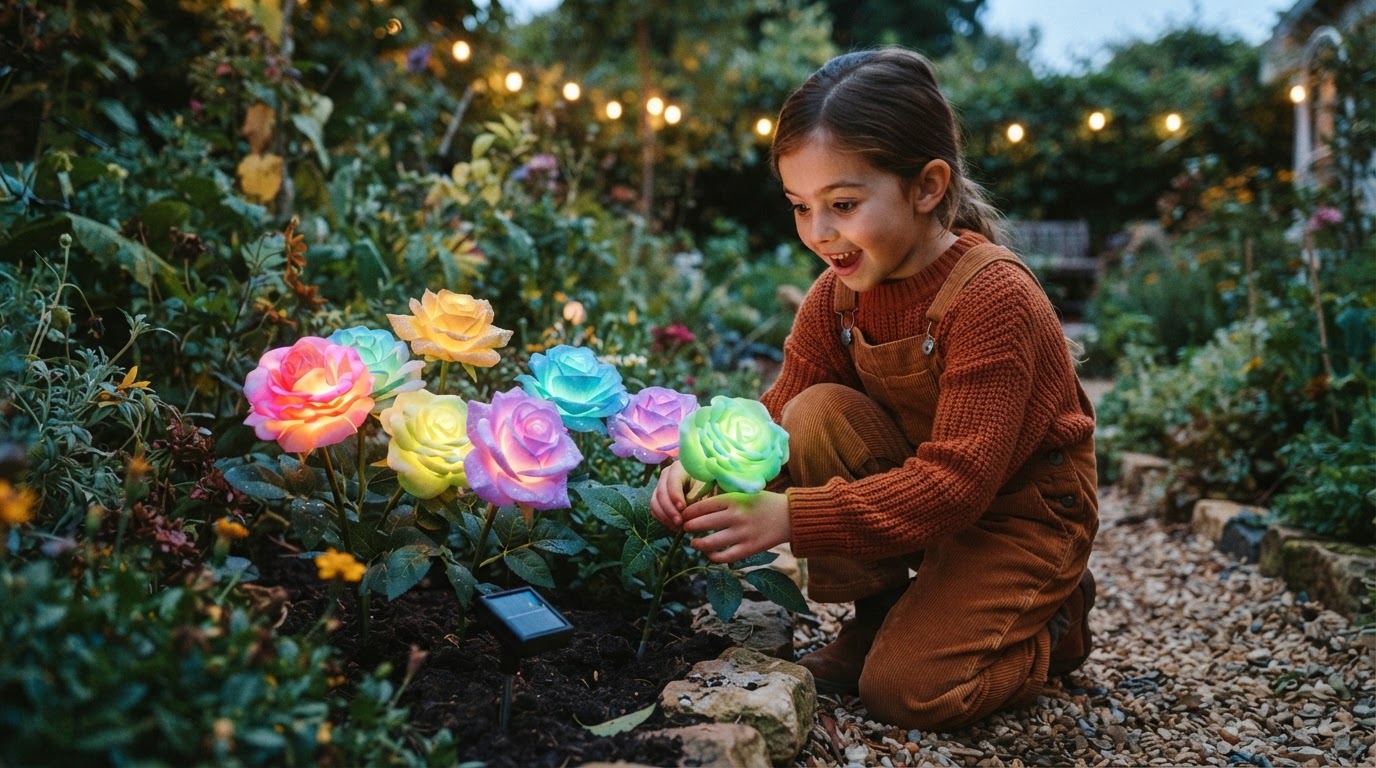
5-Step Setup for Solar Rose Lights Outdoor Decor
 Maya ChenContributing Editor
September 18, 2026 — The market for artificial greenery has shifted toward functional aesthetics, with Solar Rose Lights now serving as a primary alternative to traditional wired landscape fixtures.
The conventional wisdom says that artificial plants are purely ornamental, but current integration of photovoltaic cells into fabric petals suggests a move toward utility-driven decor. According to data provided by GIGALUMI, these units are now constructed with reinforced iron wire stems and high-quality fabric designed to withstand environmental stressors while maintaining a romantic glow. While social media trends on platforms like TikTok highlight the visual appeal of these floral lamp posts, the mechanical reality of their performance depends entirely on solar conversion efficiency and physical placement.
The 5-Step Setup Framework
Successful installation of Solar Rose Lights requires more than just aesthetic positioning; it demands a strategic approach to light absorption. First, verify the integrity of the ABS plastic housing and the fabric petals, as these are the primary barriers against moisture. Second, ensure the solar panel is positioned at a 45-degree angle to maximize midday solar intake. Third, clear any overhanging foliage that might create micro-shadows, which significantly degrade battery charging cycles. Fourth, switch the internal toggle to the 'on' position before grounding the stake; many users overlook this step, leading to false claims of hardware failure. Finally, group the units to create a cohesive light field.
Run the math: these units typically feature a 100% solar-powered light sensor that triggers at dusk. If the panel receives less than six hours of direct sunlight, the runtime will drop from the standard eight hours to fewer than three. This isn't a defect; it is a limitation of current battery density in small-form garden stakes. When considering how LED solar roses compare for garden lighting, the efficiency of the diode is only as good as the energy stored during the day. Furthermore, while multi color Solar Rose Lights offer visual variety, the power draw for cycling through spectra can be higher than single-color steady-state LEDs. Proper placement ensures that even color changing solar rose lights have sufficient reserves to last through the night. Choosing multi color solar roses for a garden requires a heightened focus on panel orientation to compensate for the additional circuitry power requirements.
Expert tip: Use a damp cloth to wipe the solar panel every thirty days. Dust accumulation on the ABS surface can reduce charging efficiency by up to 15%, which is the part nobody talks about when discussing long-term maintenance of artificial floral lighting.
I'll change my mind when solid-state batteries become standard in consumer garden stakes, but for now, strict adherence to these placement steps is the only way to ensure consistent performance.
Sources
- Artificial Flowers Solar Powered Decorative Rose Garden Stake ...
- GIGALUMI Artificial Roses Solar Lights (4 Pack)
- Artificial flowers meets solar power lamp post The combo you didn't...