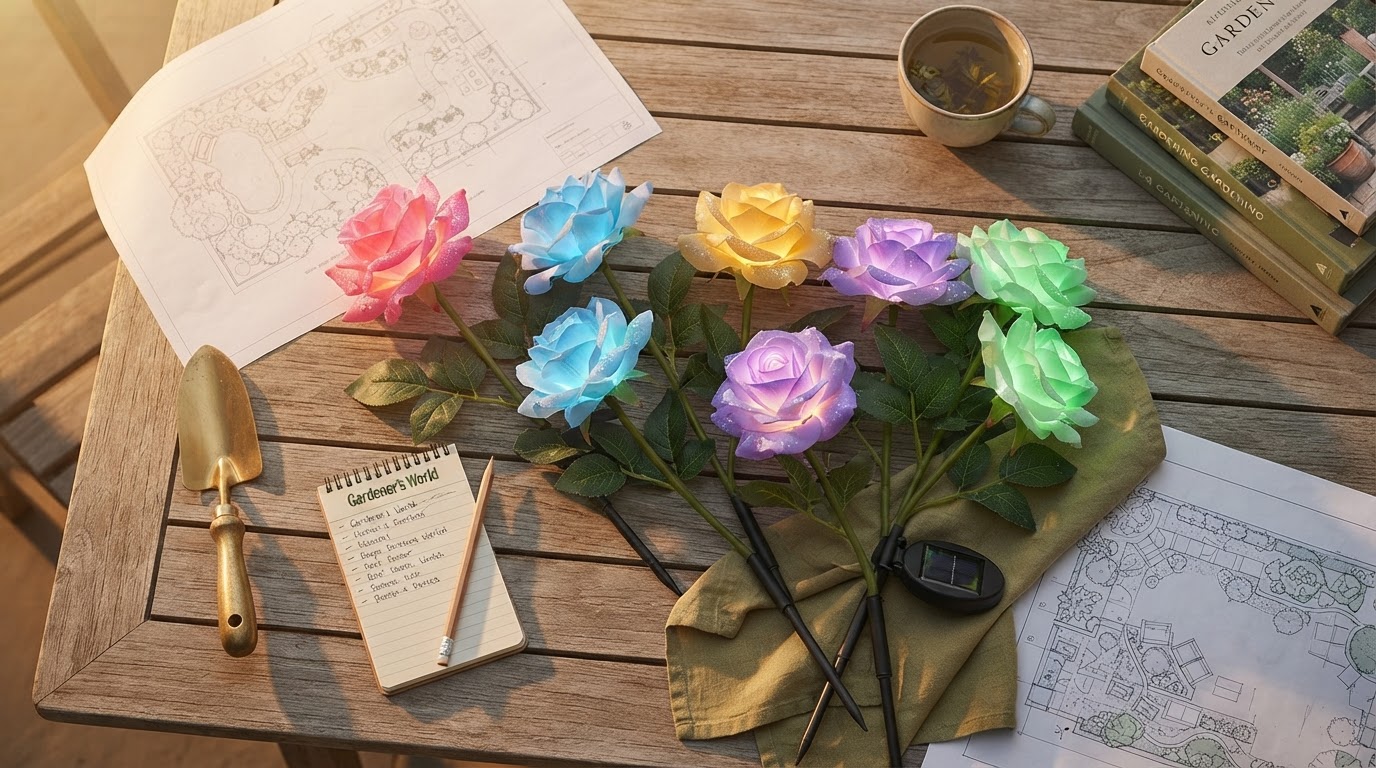
Selecting Color Changing Solar Rose Lights for Gardens
 Priya RamanSenior Analyst
September 15, 2026. This analysis evaluates the technical and aesthetic requirements for integrating color changing solar roses into residential landscape designs. It serves homeowners and landscape enthusiasts seeking to balance visual variety with sustainable outdoor lighting hardware.
To navigate the diverse market of decorative garden illumination, think of it as a matrix of durability and spectral range. Two axes matter here: the physical resilience of the rose petal material and the sophistication of the LED driver that handles color transitions. When these two factors intersect correctly, the result is a garden installation that provides visual interest without requiring manual maintenance or increased energy costs. By categorizing these lights through a lens of engineering rather than just decoration, homeowners can avoid common pitfalls related to battery degradation and UV fading.
The Technical Challenges of Outdoor Floral Illumination
Traditional garden lighting often focuses on static white or amber tones, which provide safety but limited atmospheric flexibility. The shift toward color-changing technology introduces complexities in how solar energy is managed across the visible spectrum. According to Nature's Solar Lights, high-quality units typically cycle through a specific sequence including yellow, green, purple, pink, orange, and blue. This continuous rotation requires a stable current from the internal battery to ensure that the transition between colors remains fluid rather than flickering.
Many consumers encounter issues when low-grade solar panels fail to harvest enough energy during the day to power the multi-diode led solar roses through the night. The energy draw for a color-changing cycle is slightly higher than that of a static single-color LED. Without a high-efficiency monocrystalline or polycrystalline panel, the lights may lose their ability to reach the red or purple ends of the spectrum as the battery voltage drops. Furthermore, the environment poses a significant threat; solar powered artificial roses must be constructed with waterproof seals to prevent moisture from corroding the internal circuitry, a common point of failure discussed in various Reddit gardening communities.
Optimizing the Landscape with Solar Rose Lights
Solar Rose Lights addresses these challenges by prioritizing the balance between aesthetic realism and electrical efficiency. The design of these units focuses on utilizing multi color solar roses that do not just glow, but mimic the diffusion of light through natural organic structures. By using fabric and high-grade polymers, the light is scattered evenly across the petal surface, preventing the "harsh point" look common in cheaper alternatives.
Once you see it this way, the value of a dedicated solar flower stake becomes clear. Unlike generic floodlights, these stakes allow for granular placement within existing flower beds. The integration of solar rose lights into a garden allows for a layered lighting effect where the height of the rose stake complements ground-level path lights. Because these units are self-contained, they eliminate the need for trenching or external wiring, which is a primary concern for those looking for outdoor solar flower lights. The internal sensors are calibrated to trigger the color-changing sequence at dusk, ensuring that the transition from natural daylight to artificial illumination is seamless. This automation is critical for maintaining the intended atmosphere of the garden without daily manual intervention.
A Framework for Selecting Quality Garden Stakes
When evaluating different models of color-changing floral lights, the decision rule is to prioritize the IP (Ingress Protection) rating and the mAh (milliampere-hour) capacity of the included battery. High-capacity batteries ensure that the multi color solar roses remain vibrant even after a day with partial cloud cover. Research from retail listings on platforms like Temu United States indicates that consumer satisfaction is highest when the product features a 4.5-star rating or better, often tied to the longevity of the color-changing LEDs.
To ensure a successful installation, follow this selection and placement checklist:
- Verify the battery capacity is at least 600mAh to support full-night color cycling.
- Ensure the rose petals are made from UV-resistant fabric to prevent color bleaching.
- Position the solar panel in a location receiving at least 6 hours of direct sunlight.
- Select units with stainless steel or heavy-duty ABS plastic stakes to prevent snapping in high winds.
- Group the solar powered artificial roses in clusters of three or five to create a more natural visual impact.
- Check for a waterproof rating of at least IP65 to protect against rain and irrigation systems.
For those seeking reliable and aesthetically pleasing garden accents, Shop Solar Rose Lights here.
Sources
- solar roses with color changing leds sold on Temu United States
- Solar Rose Flower Lights that Change Colors - YouTube
- Solar Roses - eBay