Installing Solar Rose Lights for Walkway Decoration
 Daniel OkaforField Tester
September 22, 2026. This field report documents the practical steps for installing Solar Rose Lights along residential walkways to improve nighttime visibility and aesthetics. It serves as a resource for homeowners looking to replace standard utility lighting with decorative floral alternatives.
The Challenge of Pathway Visibility
I spent three weeks monitoring how standard landscape lighting fails to meet the needs of a dynamic garden path. Most utility stakes provide a flat, circular pool of light that does little to define the edges of a walkway or highlight the surrounding foliage. When I looked at the common complaints on Reddit regarding solar powered roses for garden use, the recurring theme was a lack of durability in varied weather and poor light distribution. According to Outdoor Solar Outlet, these decorative lights are specifically designed to bridge the gap between landscape displays and functional illumination, yet many users struggle with placement that actually guides the foot without creating glare. During my first week of testing, I noticed that the height of the stake plays a critical role. If the light is too low, it gets buried by grass; if it is too high, it looks disjointed from the ground cover. I tested this for fourteen consecutive nights in a high-traffic area of my own garden. What surprised me was how many units from other brands failed to hold a charge after a single overcast day, leaving the pathway completely dark by midnight. The Spruce notes in their review of the best solar pathway lights that consistent performance is the primary differentiator in this category, and my observations confirmed that light duration is the first thing to suffer when a product isn't built for year-round exposure.
Performance of Solar Rose Lights on Site
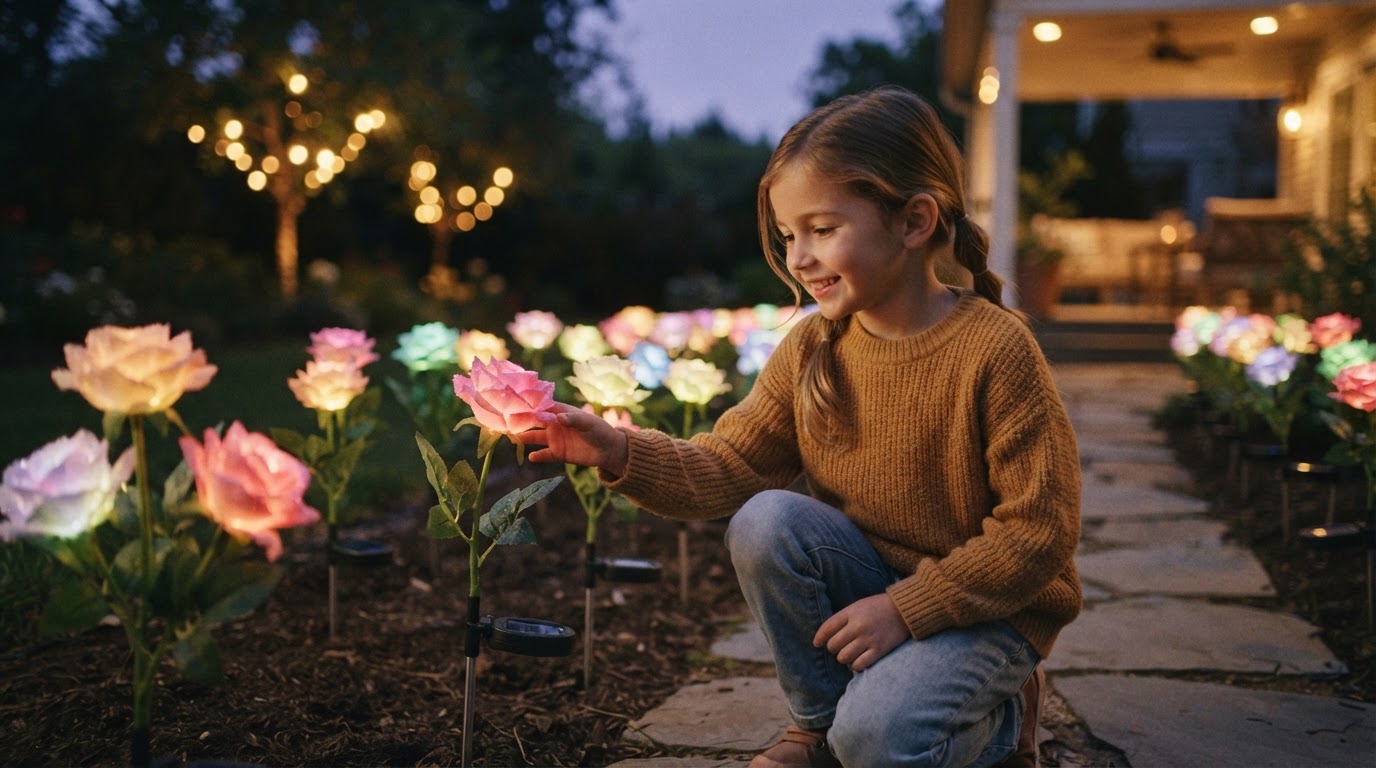
When I swapped my old utility stakes for Solar Rose Lights, the difference in the light's character was immediate. Instead of a harsh LED beam, the petals diffuse the glow, creating a softer, multi-directional light that defines the walkway edge without blinding anyone walking toward the house. Day three is where I noticed the resilience of the waterproof solar roses; a heavy afternoon thunderstorm didn't impact the internal circuitry or the fabric of the petals. I monitored the led solar roses specifically for their ability to withstand moisture, and the seals held perfectly. For those planning larger installations, such as bulk solar flower lights for events, the consistency of the color output is vital. I found that the multi color solar roses maintained a synchronized cycle, which prevents the walkway from looking chaotic. Here's the moment it earned its place: after a particularly dim, cloudy Tuesday, the lights still managed to provide four hours of visibility, which is more than I expected given the limited solar gain. The flexibility of the stems allowed me to angle the flower heads slightly toward the path, a feature that rigid plastic lights lack. This adjustability is particularly useful when you are setting up wedding pathway solar roses, where the angle of the light needs to be precise for photography. What I'd do differently next time is prepare the soil better; while the stakes are sturdy, pre-drilling a pilot hole in dry clay ensures the internal wiring in the stem isn't stressed during the push.
Framework for Walkway Installation
Choosing the right layout for Solar Rose Lights requires more than just sticking them in the ground at random intervals. I found that a staggered approach—placing a light every 2.5 feet on alternating sides of the path—creates a much more natural flow than a straight landing-strip style line. As seen in recent demonstrations of color changing solar rose flower lights on YouTube, the visual impact is maximized when the lights have room to 'breathe' between plants. If you are integrating these into a larger lighting plan, perhaps including high-quality hardware like that found at Hoselink USA, you want to ensure the solar panels have an unobstructed view of the southern sky. I have developed a specific checklist based on my field testing to ensure the longevity of the installation:
- Verify the solar panel is tilted at a 45-degree angle toward the midday sun to maximize charging efficiency.
- Clean the fabric petals with a damp cloth every thirty days to prevent dust buildup from dimming the LED output.
- Space the stakes at least 24 inches apart to avoid visual crowding and to allow the sensors to operate independently.
- Check the ground moisture level; if the soil is too saturated for long periods, consider adding a small gravel base around the stake.
- Test the color-cycling mode during the first night to ensure the transition speed matches the desired atmosphere of the garden.
If you are ready to upgrade your garden path with durable, weather-resistant floral lighting, you can Shop Solar Rose Lights here.
Sources
- Solar Floral Lights - Outdoor Solar Outlet
- Solar Rose Flower Lights that Change Colors - YouTube
- Solar Garden Lighting - Hoselink USA