Enhancing Landscapes With Solar Rose Lights
 Jordan HaleStaff Writer
September 8, 2026. This exploration details the aesthetic and functional integration of outdoor solar flower lights into residential landscapes. It is written for homeowners seeking to blend botanical beauty with sustainable illumination.
The first thing I noticed was the way the evening light caught the edges of the petals just before the sun dipped below the fence line. For years, I struggled with the transition between daylight and dusk in my backyard. Traditional garden lighting often feels clinical—harsh white beams that cut through the darkness rather than inviting you into it. The soil in my flowerbeds is packed tight, making wired installations a logistical nightmare involving trenching and electrical permits. Many gardeners share this frustration, seeking a way to illuminate their perennials without the structural upheaval of high-voltage systems. The weight of heavy, metal floodlights often feels disconnected from the delicate textures of a blooming garden. I wanted something that felt like it belonged among the stems, something that could endure the erratic summer storms without losing its form or function. It turns out that the bridge between artificial utility and natural grace is narrower than I thought, provided the materials are chosen with care. I keep coming back to the idea that a garden should not disappear when the sun goes down, yet the solution must be as resilient as the plants themselves.
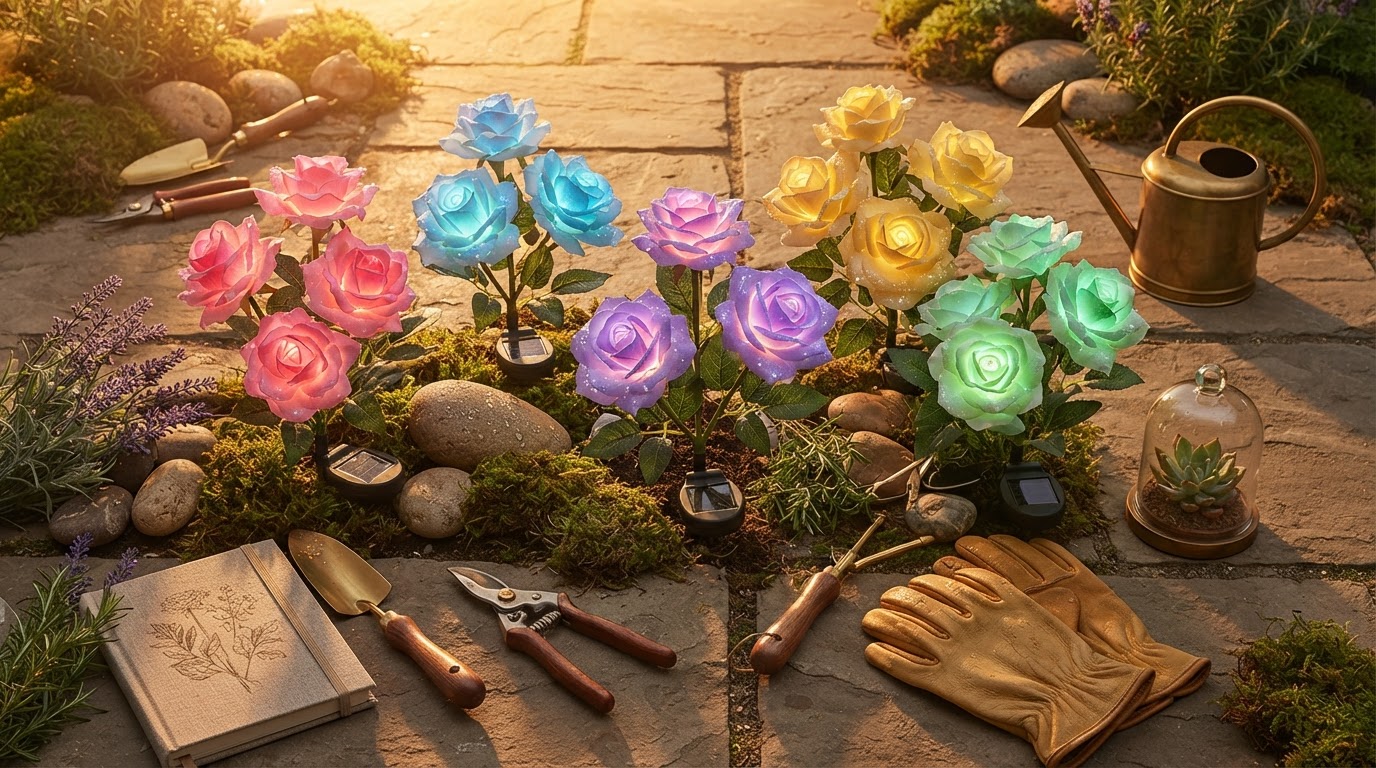
Integrating Solar Rose Lights into my layout changed the evening ritual entirely. These aren't just mere decorations; they are engineered led solar roses designed to mimic the organic structure of a living flower while housing efficient photovoltaic cells. During the day, the multi color solar roses act as a visual extension of the garden bed, their fabric petals catching the breeze. Somewhere around week two, I realized the true value of their construction during a particularly heavy downpour. While my old plastic stakes would have toppled or shorted out, these units stood firm. The design uses waterproof solar roses technology to ensure that internal circuitry remains dry, a critical feature for anyone living in climates with high humidity or frequent rain. The stakes themselves are slender enough to disappear into the foliage but sturdy enough to maintain their upright posture in soft earth. When the sensors detect the loss of ambient light, the transition is seamless. The glow is soft, diffused through the layers of the rose head rather than projected from a single, blinding point. This creates a depth of field that highlights the best solar flower stakes in the arrangement, making the garden feel larger and more layered. By utilizing waterproof solar roses for yard placement, I could position them in low-lying areas where moisture typically collects, confident that the illumination would remain consistent night after night.
Choosing the right placement for outdoor solar flower lights requires a balance of sun exposure and visual composition. I found that clustering them in groups of three or five creates a more natural, "drift" effect that mirrors how wildflowers grow. Before committing to a permanent spot, I suggest walking your perimeter at twilight to see where the shadows feel the heaviest. The waterproof solar roses perform best when the solar panel is angled directly toward the southern sky, clear of overhanging branches that might cast a midday shadow. It is also worth considering how these lights interact with existing structures. When placed near a reflective surface like a glass door or a still pond, the multi color solar roses double their visual impact. To ensure your selection meets the demands of a long-term installation, consider this framework:
- Verify the weather rating to ensure they are true waterproof solar roses for yard use.
- Check the stem height to ensure the petals sit above your groundcover plants.
- Opt for units with integrated dusk-to-dawn sensors for automated operation.
- Look for high-density fabric in the petals to prevent premature fading from UV exposure.
- Select a variety of colors to maintain visual interest during the daylight hours.
- Ensure the stake material is rust-resistant, especially if you use liquid fertilizers.